Stupendous acoustic cover of Слот’s classic song Ripples on Water, vocals by Tatiana Khomenko. While her voice I believe not to be as powerful as Nookie’s, this lady sure has serious lungs. Beautiful!
Notes

Giorgos Panousopoulos’ film, featuring Aris Retsos and Betty Livanou, a classic glimpse into the Athens of the 80s with its Pacman, bike racing and Bob Dylan. A feast for the senses, a story about meeting someone, sharing a moment together and then returning to your pointless and lonely life.
With my grandfather’s telescope. He watched mermaids with it.
One part of the brain scrambles and kills the other, until a social equilibrium is reached or the crucible destroys the victim.

Once I had believed in Father, and the world had seemed small, and old. Now he was gone, and I wasn’t afraid to love him any more. And the world seemed limitless.
Walk into any zoomer’s idea of “old internet nostalgia” and you’ll be assaulted by virtual glitter, neon colors, and websites that look like a Lisa Frank folder exploded. They’ve discovered terms like “Fruitiger Aero” and “Y2K aesthetic” - keywords that literally didn’t exist before 2018 - and decided this constitutes understanding internet history.
But here’s the problem: they’ve confused the wrapping paper for the gift.
The old internet wasn’t good because of how it looked. It was good because of how it worked. And on that fundamental level, modern “old internet” enthusiasts have learned absolutely nothing. Digital Cargo Cult: How Zoomers Ruined Old Internet Nostalgia

As a species we’re fundamentally insane. Put more than two of us in a room, we pick sides and start dreaming up reasons to kill one another. Why do you think we invented politics and religion?
In a nightmarish world I would not feel guilty for nightmares. In a dreamy world I should not feel guilty for dreams.
This Classic was handed to me alongside my Uncle Mark’s Apple II, which I’ll probably cover later (we’ve played a game of whack-a-mole with issues on that machine! Well worth it but I haven’t hit a point where enough things are working to cover it well, heh).
The Classic is a strange Mac—it was introduced in 1990 as a budget version of the 1986 Macintosh Plus, with a 68000 CPU in an era when the 68030 was the new hotness.
It started under $1,000, but was a slightly more modern take on the Plus, including a cooling fan, a new motherboard design, and options for up to 4MB of RAM and an internal SCSI hard drive connection. Build log: Macintosh Classic
Building a computer in the 90s was different than it is today. It wasn’t just harder or more expensive. It seemed like every new build was an adventure. I probably built a few hundred systems before the decade ended, but the first few were definitely the most memorable. One in particular stands out above the rest.
It was 1996. My friend Tom wanted a modern computer that was capable of handling photography work. He was in his early 20s at the time, so he had some money to work with, but computers were expensive, so it wasn’t something he could just do on a whim. So as he saved up for the project, we picked up some items along the way as opportunities presented themselves. Building a computer in the 90s

Lord of the Rings, but Russian.
There’s no beginning, there is no end
There is only change.
Progression backwards, is this where we are heading?
Take back your soul, forget your emptiness.

The hipster is a cultural artifact that has been entirely subsumed by the mainstream. Everyone is a little bit hipster now, but there aren’t hipsters anymore
Capitalism will kill us all, and i dont think there’s anything we can do about it, we’re locked into the deanthropization of capital production.

That’s why we call it The Majestic. Any man, woman, child could buy their ticket, walk right in. Here they’d be, here we’d be. “Yes sir, yes ma’am. Enjoy the show.” And in they’d come entering a palace, like in a dream, like in heaven. Maybe you had worries and problems out there, but once you came through those doors, they didn’t matter anymore. And you know why? Chaplin, that’s why. And Keaton and Lloyd. Garbo, Gable, and Lombard, and Jimmy Stewart and Jimmy Cagney. Fred and Ginger. They were gods. And they lived up there. That was Olympus. Would you remember if I told you how lucky we felt just to be here? To have the privilege of watching them. I mean, this television thing. Why would you want to stay at home and watch a little box? Because it’s convenient? Because you don’t have to get dressed up, because you could just sit there? I mean, how can you call that entertainment, alone in your living room? Where’s the other people? Where’s the audience? Where’s the magic? I’ll tell you, in a place like this, the magic is all around you. The trick is to see it.
I added a new project page to the website, where I intend to keep Ladybird macOS builds. They’re not official because there are no official builds for now and I’m building the web browser on a MacBook Pro M1 running macOS 15.5 “Sequoia”.

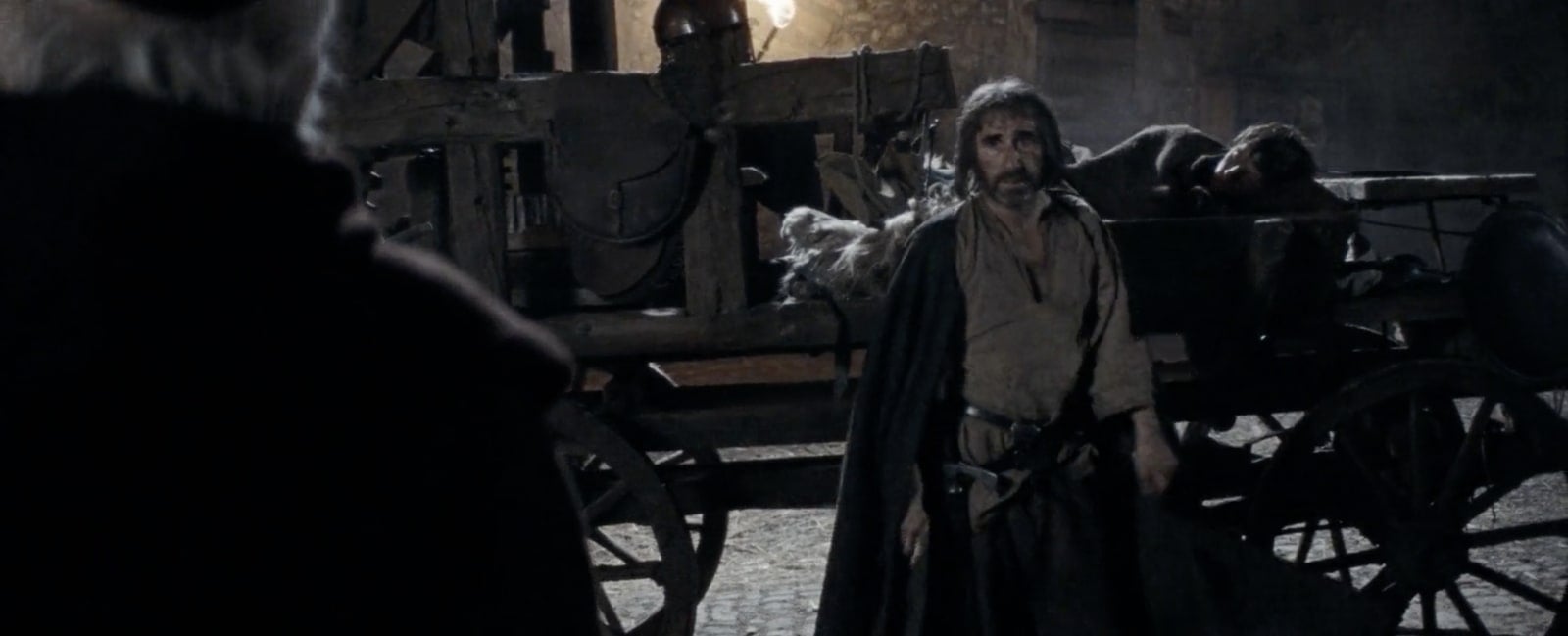
The fumes of the dead are in the air like poison. The plague, more cruel and more pitiless than war, descended upon us. A pestilence, that would leave half of our kingdom dead. Where did it come from? What carried its germ. The priests told us it was God’s punishment. For what sin? What commandment must we break that could earn this? No, we knew the truth. This was not God’s work, but devilry. Or witchcraft. But our task, to hunt down a demon, was God’s cure.
Yesterday I was wondering whether I could use my RTL-SDR blog v4 on my iMac G5 running OS X Leopard, and it seems the answer is maybe. The Osmocom-modified driver can be compiled easily, not sure if the same can be said about any of the applications that use it (GNUradio, Gqrx, SDR++, SDRAngel).
Make sure you have all installed prerequisites (MacPorts should already be installed, I compiled it using gcc14 but it might work with gcc 4.0 or 4.2):
$ sudo port install libusb gcc14 git
To compile the driver, clone the official repo and compile it:
$ git clone https://github.com/rtlsdrblog/rtl-sdr-blog.git
$ cd rtl-sdr-blog
$ mkdir build && cd build
$ LDFLAGS="-L/opt/local/lib" CC="gcc-mp-14" cmake ../
$ make LIBRARY_PATH=/opt/local/lib
$ sudo make install
And the library and associated programs will be installed into /usr/local/bin and /usr/local/lib. If you plug the RTL-SDR v4 into a USB port, you can test it using rtl_test.
$ rtl_test
Found 1 device(s):
0: RTLSDRBlog, Blog V4, SN: 00000001
Using device 0: Generic RTL2832U OEM
Found Rafael Micro R828D tuner
RTL-SDR Blog V4 Detected
Supported gain values (29): 0.0 0.9 1.4 2.7 3.7 7.7 8.7 12.5 14.4 15.7 16.6 19.7 20.7 22.9 25.4 28.0 29.7 32.8 33.8 36.4 37.2 38.6 40.2 42.1 43.4 43.9 44.5 48.0 49.6
Sampling at 2048000 S/s.
Info: This tool will continuously read from the device, and report if
samples get lost. If you observe no further output, everything is fine.
Reading samples in async mode...
Now, compiling Gqrx to run on PowerPC OS X 10.5 might be a huge beast to tackle, since latest versions are using QT6/5, which is a no-no for OS X, but older versions use QT4, so there might be a chance. But that’s for another day.


The darker the whore, the brighter the flame.