There are two paths for people when they are born.
The path of slavery, it crushes and decays.
And the path of the star, it illuminates but kills.
You will choose the star.
Your path will be hard, and it will be marked by blood.
But in the name of justice, wherever a single person goes, thousands more will rise up.
And when there are no more people, then the stones will rise up.
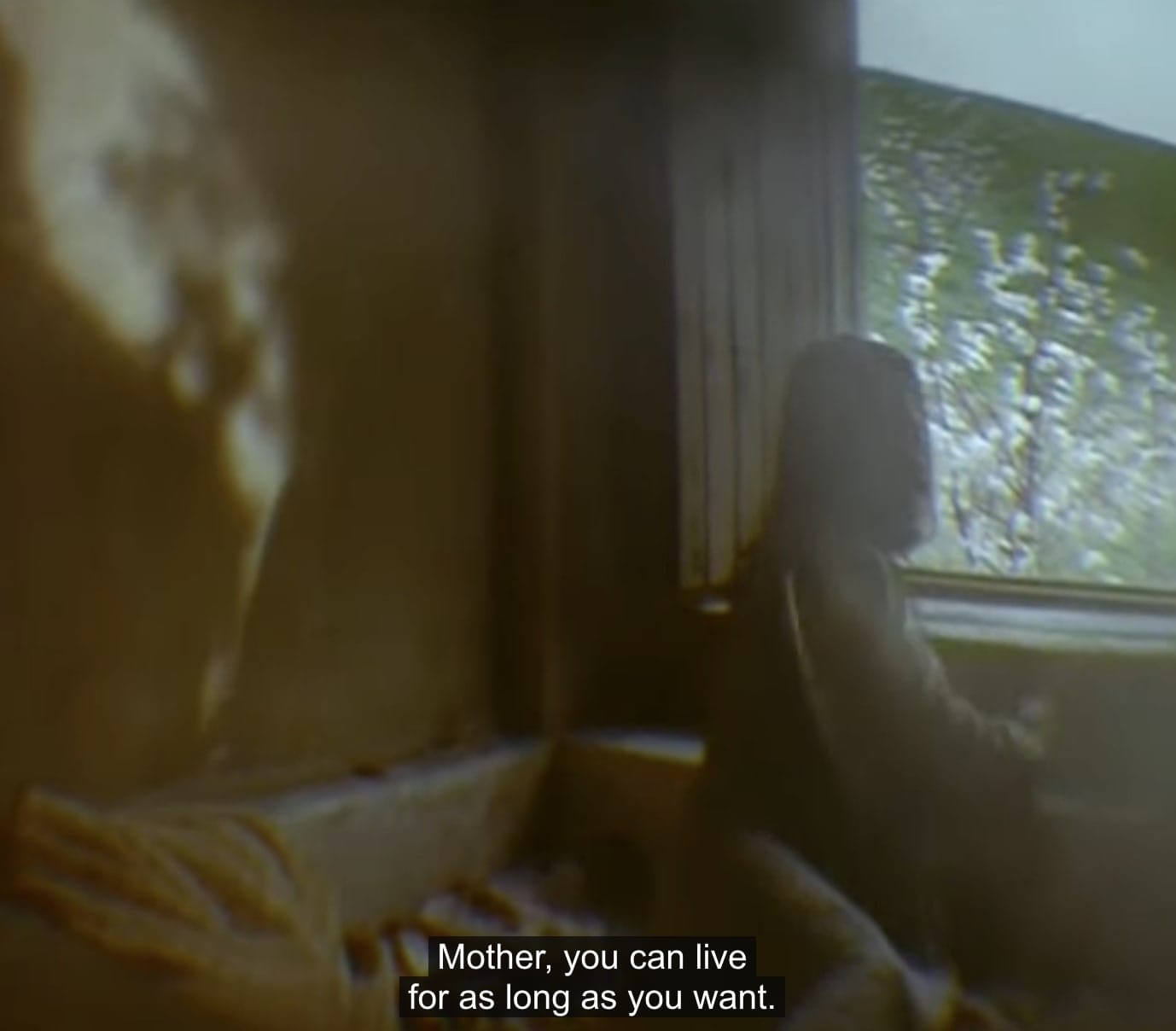
Mother and Son, 1997
Mother and Son is an one-of-a-kind experience that you will never have again; Sokurov’s film is a masterpiece, a visual and auditory masterpiece that resembles more an oil painting than a modern movie.
I’ve read reviews where people call Mother and Son hypnotic, moving, powerful, beautiful, dreadful, but that doesn’t encompass everything that can be said about it: it’s a tremendously moving piece of art. And while the comparison with Tarkovsky has a leg to stand on, it’s more Dreyer than Tarkovsky.
It seems like people live just like that. But they die for some specific reason. What reason do I have? None. You have no reason. There is no reason. Be alive and enjoy yourself.
My Best Fiend, 1999
I don’t have a favorite actor, but if I had one it would have been Klaus Kinski: he was absolutelly possessed whenever he was in front of a camera. Werner Herzog’s documentary about his f(r)iend offers us a small glimpse into the life of a troubled actor and an equally troubled director, each making plans to murder the other one. Both Klaus and Werner are mad geniuses, undoubtly. Also, much like Kinski’s book, the account given by Herzog here is a highly subjective one, we don’t know the true extent of the truth and we will never know.
The ending of the documentary, with Klaus playing with the butterfly, transcends everything that was said about the huge persona of Klaus Kinski: please take your time and watch Fitzcarraldo, Aguirre, Nosferatu, Woyzeck and Cobra Verde. Please. You won’t be sorry.
Every grey hair on my head, I call Kinski.
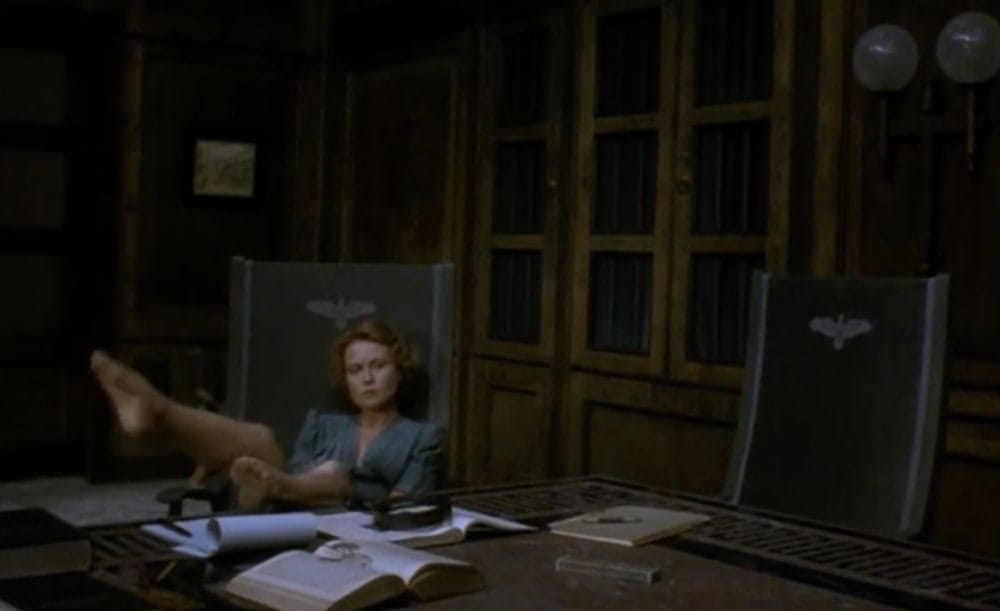
Moloch, 1999
A slow film by Aleksandr Sokurov, a very subtle but unforgettable encounter with Hitler when you actually feel like you met not only him but also his entourage, that you met them personally and what an experience it is. For the first time in narrative history, Adolf Hitler is shown to be human.
Death is Death. It cannot be defeated.
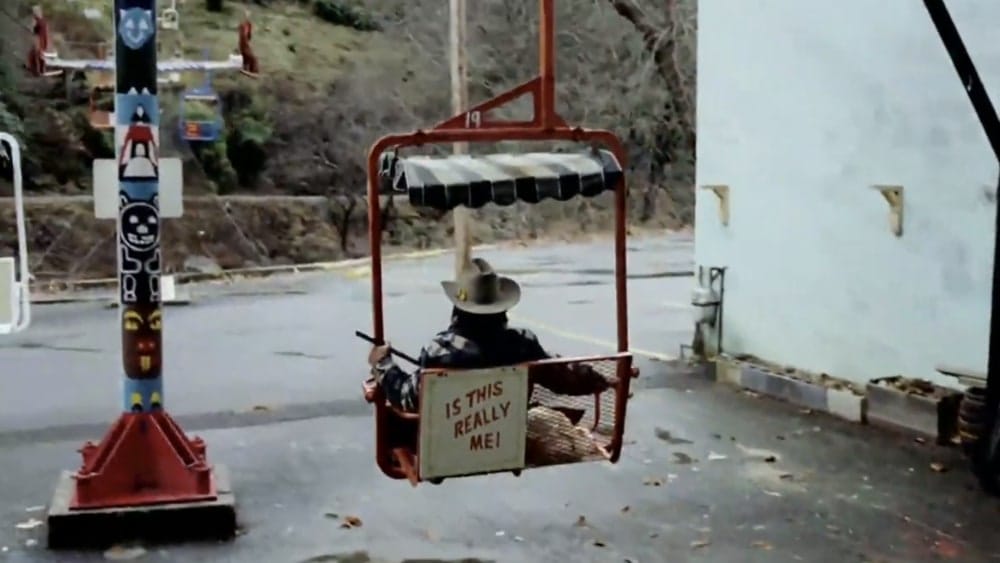
Stroszek, 1977
Beautiful film by Werner Herzog, a huge indictment of the impersonal and imposing modern world and those that it plows under. Aren’t we all dancing chickens?
We have a 10-80 out here, a truck on fire, we have a man on the lift. We are unable to find the switch to turn the lift off, can’t stop the dancing chickens. Send an electrician, we’re standing by.
Honor
When the world is ruled by psychopaths, there is honour rather than shame in being an enemy of the state.
Robert Wyatt - Alifib (live)
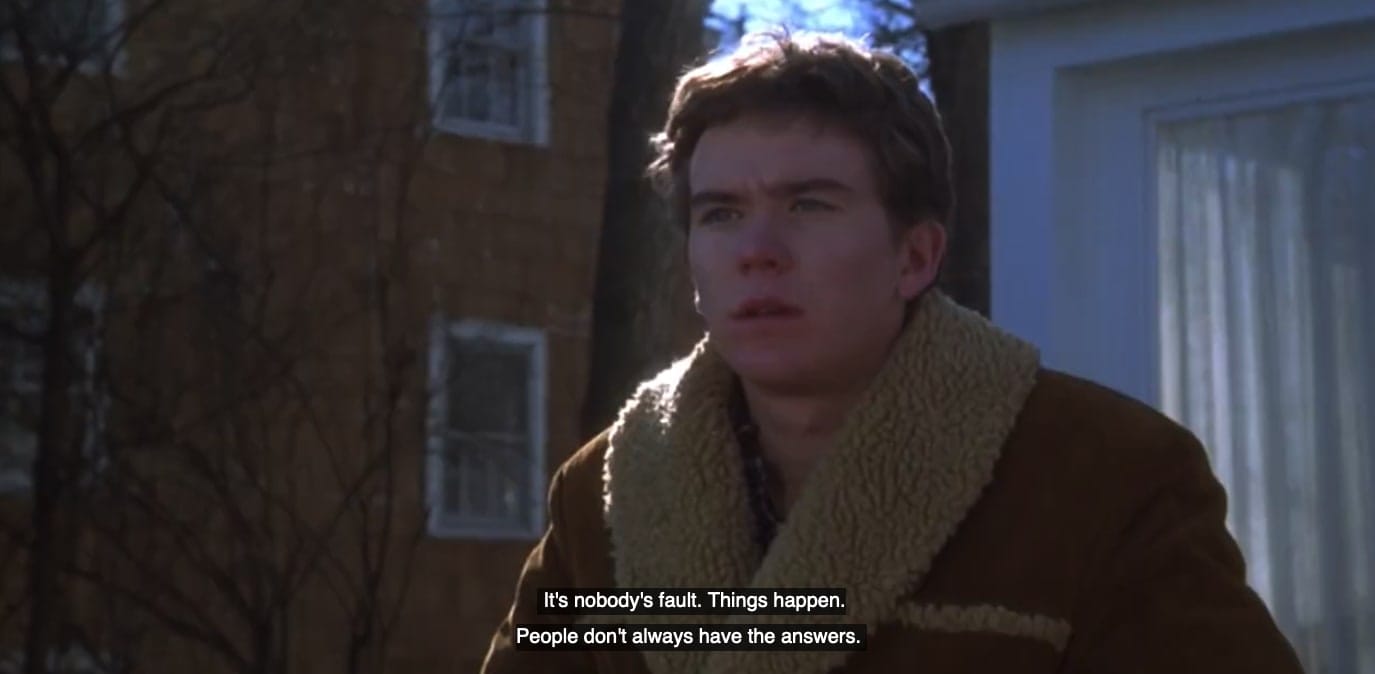
Ordinary People, 1980
We would have been all right if there hadn’t been any… mess. But you can’t handle mess. You need everything neat and easy. I don’t know. Maybe you can’t love anybody. It was so much Buck. When Buck died, it was as if you buried all your love with him, and I don’t understand that. I just don’t know, I don’t… maybe it wasn’t even Buck. Maybe it was just you. Maybe, finally, it was the best of you that you buried. But whatever it was… I don’t know who you are. And I don’t know what we’ve been playing at. So I was crying. Because I don’t know if I love you anymore. And I don’t know what I’m going to do without that.
Perception
You know what changed the perception of the world to kids? Not Tiktok, but childless cat ladies “educating” children in Rockefeller daycare centers.
The Quick and the Dead, 1987
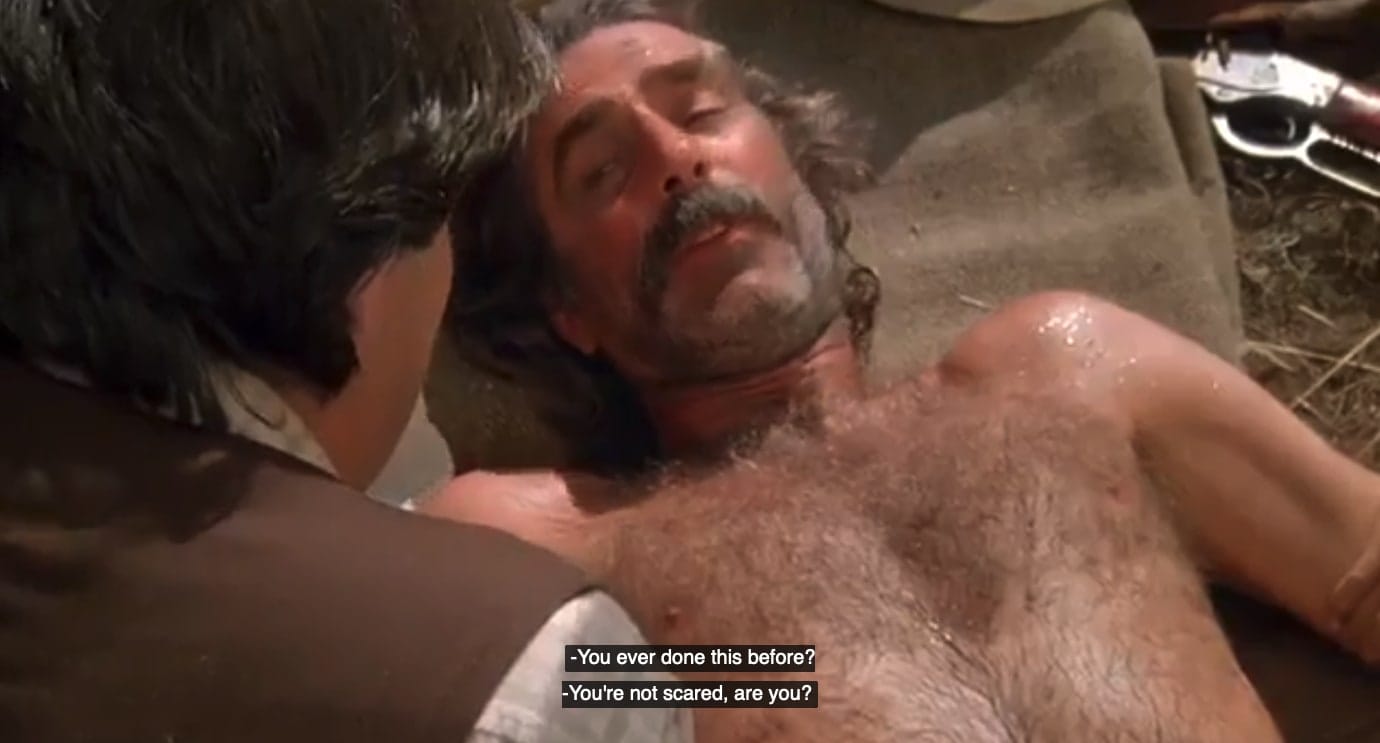
Little-known Western, it’s got Sam Elliott and Tom Conti, so what can go wrong? A really good action movie starring the best moustache in the whole wide West. In the pussyfied world of today, everybody needs a pinch of masculinity, and Sam IS masculinity.
Why is it that the man who begs for mercy never gives it?
Deprived of their support, her breasts dropped like hanged men.
Prince of Darkness, 1987
This is not a dream… not a dream. We are using your brain’s electrical system as a receiver. We are unable to transmit through conscious neural interference. You are receiving this broadcast as a dream. We are transmitting from the year one, nine, nine, nine. You are receiving this broadcast in order to alter the events you are seeing. Our technology has not developed a transmitter strong enough to reach your conscious state of awareness, but this is not a dream. You are seeing what is actually occurring for the purpose of causality violation.
The ubiquitous Swiss Army soldier’s knife
I grew up with Swiss Army knives at home. My father and grandfathers were all in the Swiss Army, so the knives were ubiquitous at home. But not the red plasticky type ones, the real Swiss Army knives with the handles made of aluminum and four basic tools. There were two of them, and they always came with us, be it for camping or walking. I think in all those years they were never once sharpened. The fancier knives, with a myriad of tools attached were never really a thing. Sure a corkscrew was nice for picnics, but it wasn’t really practical for anything else.
The soldiers version of the Swiss Army knife likely had its origins in the tools used to maintain and disassemble the Swiss Army’s Vetterli rifles, in use from 1869 to 1889. In 1889 they introduced a new rifle, the Schmidt–Rubin (M1889), which also required a screwdriver to disassemble for cleaning. So the Swiss Army decided to purchase a folding pocket knife for its soldiers as part of standard issue. At the same time, canned food was becoming a common ration, hence the need for a can-opener. The ubiquitous Swiss Army soldier’s knife
Chat bots and humans
A conversation with a chat bot is endless but one with a human eventually comes to an end.
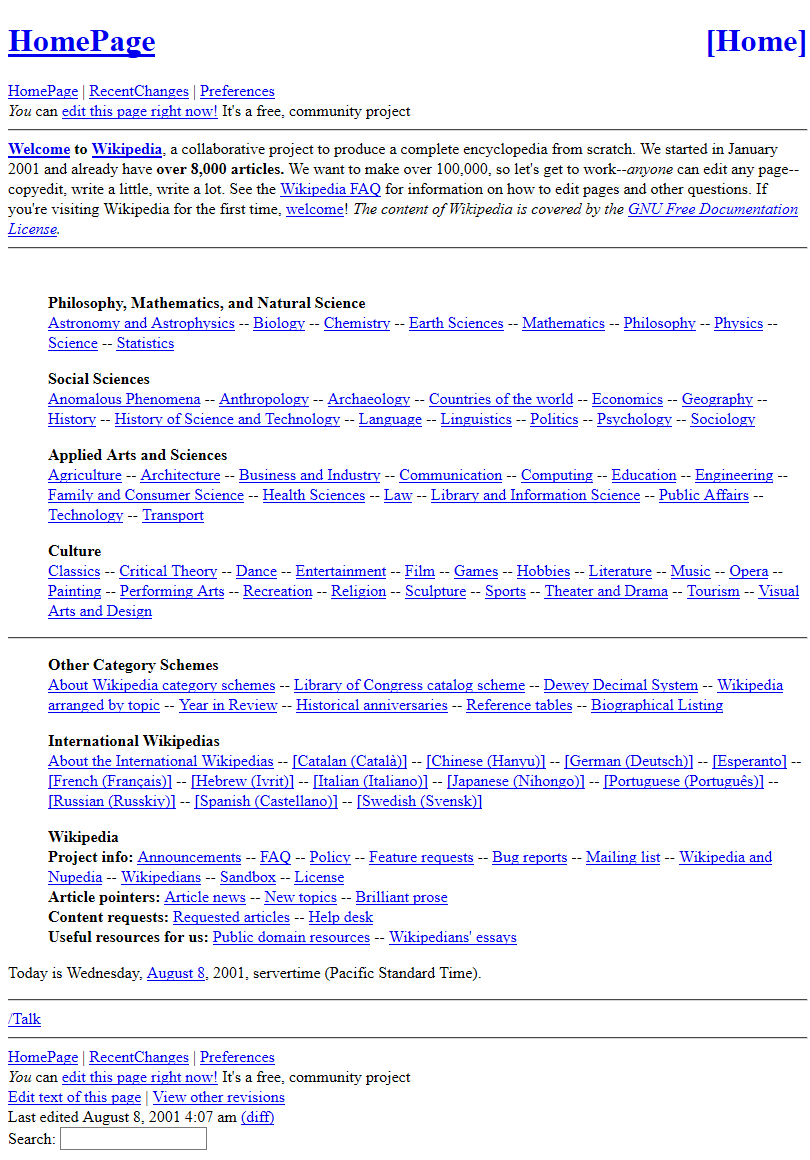
Wikipedia.org, 23 years ago
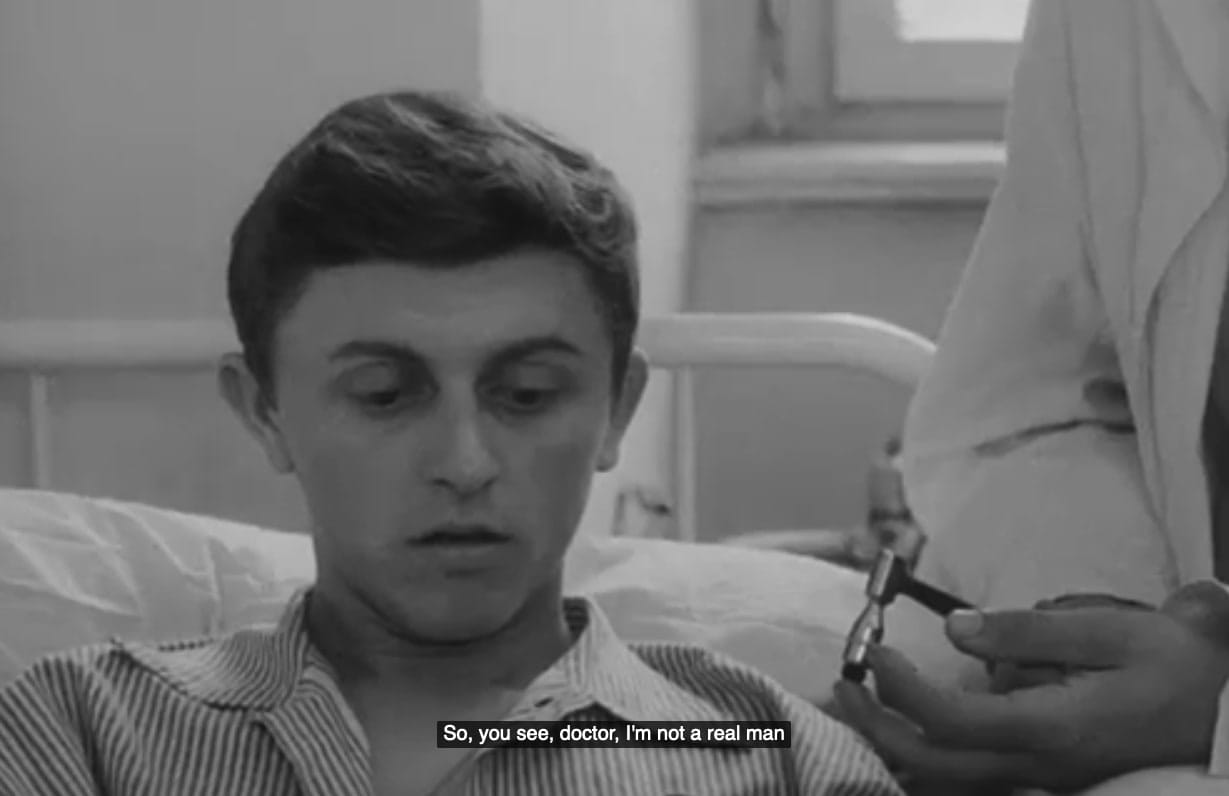
Closely Watched Trains, 1966
Nothing remarkable to be honest, it’s just an ordinary film. Watch it if you’re into the Czech New Wave thingy. Nice cinematography.
The noblest blood in Europe is going to the front to fight for peace on your behalf. Putting their lives - and blood - on the line. And how do you show your thanks to the Reich? One puts stamps all over the telegraphist’s behind, and the other one slits his wrists over some girl.
Writing Beacon Object Files Without DFR
Beacon Object Files have become very popular for red teams to add additional capabilities on the fly without needing to include the overhead of a reflective DLL or .NET assembly. This advantage comes at the cost of Beacon Object Files being a little bit awkward to develop. One development quirk is the need to prefix imported symbols with the associated library name where the symbol can be found. This concept, known as Dynamic Function Resolution (or DFR), is how the BOF tells the BOF loader where to find external symbols.