I bought this machine with the original intent to play old DOS games in their original glory. Anyway, we managed to play music and even host a webpage! See her fantastically detailed write-up here.
The version 4.4.10 of DSL we used was released in Nov 2008. It used the kernel version 2.4.31 that was released in June 2005 which is a dinosaur by today’s standards.
Throughout the entire time, the question of whether the theoretical answer of 486 is actually true lingered in my head. I did some research and found out someone actually installed Gentoo Linux with a modern kernel on a 486 PC. At least someone said it was possible although he did not give any hard evidence :( He advised that one should use a modern PC to do the source code compilation which I’ll show later. A Science Project: ‘Make the 486 Great Again!’ - Modern Linux in an ancient PC
Notes
I use internal metaphors to develop strategies on how to approach plans and accomplish things. One metaphor I’ve long used is the solitary cabin. The image of a solitary cabin comes from my long-term vision of how I want to interact with the world, especially in terms of social connections and, over the last decade, the internet.
I’ve often said I’d like to have a solitary cabin out in the woods—a place where I live, cook, read, and think in peace. Then, occasionally, I’d travel into town to get news, meet up with people, pick up some new books, and generally reconnect with the wider world. Afterward, I return to the solitude to reflect, create, and recharge. Why A Solitary Cabin?

Some time ago a friend handed me a bare J11 chip. It had been pulled from some system on the way to scrap, presumably just because it was a pretty object. I don’t know how many hands it had been through before arriving in mine but a few pins were bent and it had not been static-protected. I wondered whether it was now anything more than a pretty object.
The J11 (more properly the DCJ11, aka “Jaws”) was one of the last gasps of the PDP-11 - a CMOS microprocessor implementation of the PDP-11/70. It’s two chips actually, mounted on a single 60-pin, over-wide, DIP ceramic carrier. The J11 was developed in the early 1980s and introduced in the PDP-11/73 in 1983/84. Although this was at the end of the heyday of the PDP-11, the J11 saw a relatively long production life, being produced till sometime into the 1990s. The unit here has a date code from 1987.
I had a recollection of hearing that these microprocessors had a monitor program built into the microcode. Documentation confirmed this - it’s called ODT (Octal Debugging Technique), a simple ASCII-based console monitor. In theory, if one could appropriately wire up a UART to the J11 one should be able to talk to the ODT via a serial terminal. The question was what would be the minimal hardware setup that would accomplish this. PDP-11/HACK
SIM7600X 4G DONGLE is an industrial-grade 4G dongle, which features up to 150Mbps downlink rate and 50Mbps uplink rate, supports operating systems including Windows/Linux/Android. By simply connecting it to a laptop, PC, Raspberry Pi, IoT, industrial computer, or other IoT host device, it is easy to use a 4G network connection on the go.
- Supports 2G/3G/4G network connection.
- Driver provided, for operating systems including Windows/Linux/Android.
- Supports TCP/UDP/FTP/FTPS HTTP/HTTPS protocols.
- Supports network protocols such as TCP/IP/IPV4/IPV6/Multi-PDP/FTP/FTPS/HTTP/HTTPS/DNS.
- Onboard USB port, for directly connecting with ARM/X86 hosts or other industrial computers.
- Onboard UART port with hardware flow control, for connecting with host boards like Arduino/STM32.
- Nano SIM card slot; supports 1.8V / 3V nano-SIM card.
- 3 x LED indicators, easy to monitor the working status.
- Portable customized enclosure, mini size, nice looking.
- Baudrate support: 300bps ~ 4Mbps (115200bps by default).
- Baudrate auto-negotiation: 9600bps ~ 115200bps.
On Tuesday 22nd April one of gaming’s recent worst kept secrets was finally officially revealed, that being the “remaster” of The Elder Scrolls IV: Oblivion. During a 15 minute stream of a pre-recorded video it was revealed how much effort had gone into this release of the almost 20 year old classic, one which had been called for being given the remaster treatment following the “Special Edition” of The Elder Scrolls V: Skyrim back in 2016. Why this version of Oblivion has been released after 19 years instead of an even 20 years I don’t know, but it helps regenerate some more interest in the franchise whilst Bethesda continues to work on whatever will be the 6th entry, which was briefly mentioned during the video. Why did Bethesda call its Oblivion Remake a Remaster?
The Las Vegas-based company that would operate the future Las Vegas Spaceport west of the city is offering wealthy customers a chance to own their own military-grade personal satellite.
United Spaceports Corp., the corporate entity that owns the Las Vegas Spaceport, has begun sales of the Black Star 1000 advanced military private satellite for a flat-rate fee of $5.5 million, which includes the small-refrigerator-sized satellite, the satellite’s trip into space with a contracted launch by a private company and a terrestrial command center. Want your own personal satellite? Here’s how and what it’ll cost
CVE-2025-21204 is a local privilege escalation flaw in the Windows Update Stack. By abusing directory junctions or symbolic links, attackers can hijack trusted paths accessed by SYSTEM-level processes like
MoUsoCoreWorker.exeand execute arbitrary code with elevated privileges. A patch is available as of April 2025. Abusing the Windows Update Stack to Gain SYSTEM Access (CVE-2025-21204)
Starting with Chrome 127, Google introduced ABE: cookies (and, in future, passwords & payment data) are encrypted with a key that can only be decrypted by the browser’s own IElevator COM service and when the calling binary is inside the browser’s installation directory.
This project bypasses the path‑validation requirement by injecting a DLL into the running browser process (CreateRemoteThread + LoadLibrary) and calling IElevator from there. Chrome App-Bound Encryption Decryption

The Fediverse is like a game of chess, except none of the pawns have penises anymore.
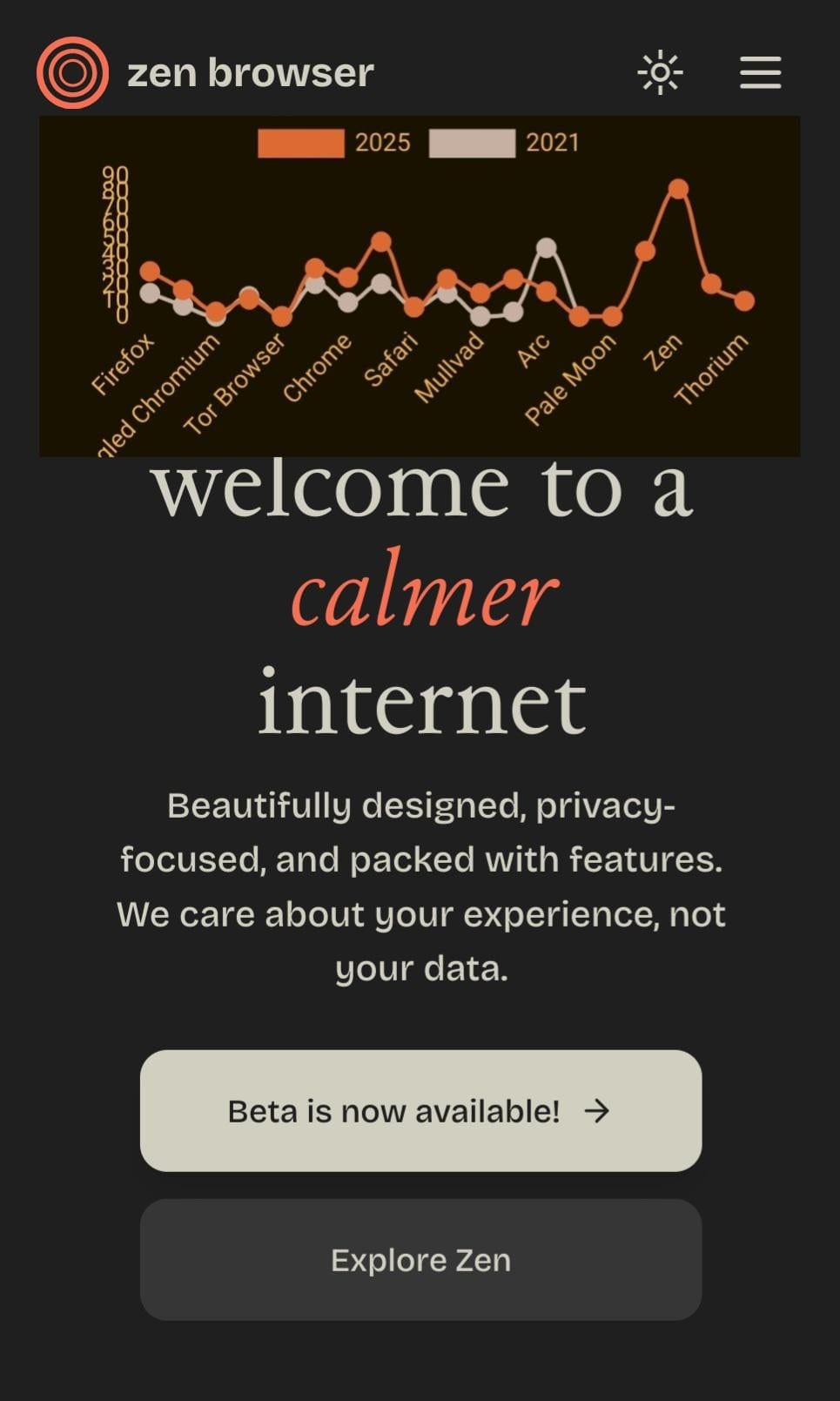
Yeah bro, Zen browser is great!
NASA’s Core Flight System (cFS) is an open-source software framework that supports mission operations by providing a modular and scalable architecture. Despite its widespread use in aerospace applications, a recent security assessment of cFS version Aquila uncovered critical vulnerabilities that could be exploited to disrupt mission-critical systems. These include Remote Code Execution (RCE), Denial of Service (DoS), and Path Traversal vulnerabilities. NASA cFS version Aquila Software Vulnerability Assessment
I can’t lose the sadness.
Computers were more fun when they weren’t full of people trying to extract profit from you at every step.
I see many people saying we’re living Cyberpunk times. No, this is Cyberjunk, not Cyberpunk.

Entertaining and fun comedy, great chemistry between Tim Matheson and Kate Capshaw.
That’s the good thing about marriage. It’s the only real cure for divorce.
When performing process injection, one of the most important IOCs that make up behavioural signatures is passing execution to our shellcode. Whilst there are multiple techniques to doing so and this is certainly nothing purely “new” - in this post I want to showcase not just a “new proof-of-concept technique”, but the entire process I went through in hope that this can become a proper addition to a capability developer’s skill set. Control Flow Hijacking via Data Pointers
I can just hear them now
“How could you let us down?”
But they don’t know what I found
Or see it from this way ‘round
Feeling it overtake
All that I used to hate
One by one, every trait
I tried, but it’s way too late.


